The article, "Cellphones, Texts and Lovers" was a very interesting read, and not at all surprising in today's era. Many people I know use texting to make plans, have deep conversations, and talk about homework assignments; why should pursuing love interests be any different? Personally, I prefer the "old-fashioned" way of dating - that is, actually dating. However, for people whose interest are, well, different, texting is the perfect way to get what they need...
The reason texting for romance could be such a phenomenon is that there's no real fear in rejection. Sure, when you see that text that says, "No thanks, not tonight," your cheeks may burn for a few seconds. But really, the person who just rejected you isn't there in person; they can't see your face as you ask for their company, and you don't have to look into their eyes as you wait for a response. No, texting is as simple as typing, pressing send, and occupying yourself with other activities (that could be anything) until the next text comes. It makes everything impersonal, and people find safety in that. It's interesting how texting has changed people socially. Even I rarely call people anymore if I think my questions could be answered sufficiently through text messaging. I can do homework and text, watch my favorite TV show and text - basically multitask. With phone conversations, all your attention has to be focused on one thing. Not to say that's a bad thing. We have lost this sense of focus, where phone conversations are the only thing of importance in that 5 minutes. That's what I mean when I say texting has changed us socially. We can do virtually anything and keep up a conversation, just making our lives even more rushed. Romance and texting doesn't quite seem to mix, though; the article doesn't really talk about romance, but more about lust. Romance should be saved for personal, intimate courtings, while lust can remain in the impersonal text messages the article mentions.
Monday, November 9, 2009

Sunday, November 8, 2009
Traffic in Maryland
So, I’m sitting in traffic on my way back from Maryland – no, I’m not driving – and we are sitting in the car at a dead stop. Because of this, two forms of media have made themselves apparent to me.
First, without the radio, we wouldn’t be able to find out why there is such a huge traffic jam and how long it’s estimated to take. With the amount of information given, very limited, I’d say this is a “cool medium,” according to MacLuhan. I am given some information, but I cannot see the accident, as I would be able to on news channels on TV. I know a little about what’s going on, but I’m left guessing and filling in blanks with mental images of the accident, hoping no one is severely hurt and that we will soon be going at least 5 miles an hour. (According to the GPS, we have gone .1 miles in the last 15 minutes.)
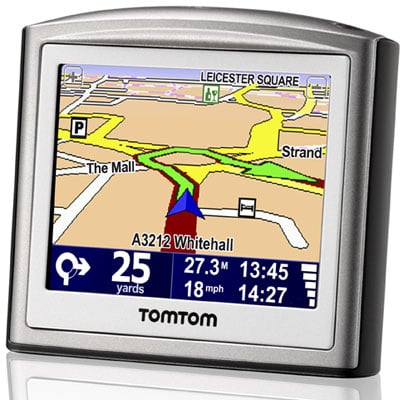
The second medium I have become more aware of is my GPS system. I’d have to say it is, in fact, a medium, because it is a means of information; not only does it give directions, but it can find essentially any place you’d want to go, as well as predicting traffic problems. I think that GPS devices have created social change, the definition of technological determinism. It’s a sad fact, but I do pay less attention to road names and landmarks because I have a GPS; it tells me exactly when to turn, so it isn’t necessary for me to do any work. I’ve noticed this in many people. Conversations I’ve had go something like this:
Human knowledge of directions is irrelevant anymore. My family just recently moved to Maryland from Florida in September, and my dad has to travel about 30 minutes to work. Though he has been attending his new job for about 2 months, he still uses his GPS to get there and back; he’s become reliant on the GPS because there’s no reason to know the route. This is definitely a social change. Because I use my GPS so often, I have come to need it even around school. People are less aware of their surroundings. As my dad says, “GPS devices have made people stupid.” The GPS itself has changed society.
Here's a picture of my friend Tom, the cause of my direction-ignorance:
First, without the radio, we wouldn’t be able to find out why there is such a huge traffic jam and how long it’s estimated to take. With the amount of information given, very limited, I’d say this is a “cool medium,” according to MacLuhan. I am given some information, but I cannot see the accident, as I would be able to on news channels on TV. I know a little about what’s going on, but I’m left guessing and filling in blanks with mental images of the accident, hoping no one is severely hurt and that we will soon be going at least 5 miles an hour. (According to the GPS, we have gone .1 miles in the last 15 minutes.)
The second medium I have become more aware of is my GPS system. I’d have to say it is, in fact, a medium, because it is a means of information; not only does it give directions, but it can find essentially any place you’d want to go, as well as predicting traffic problems. I think that GPS devices have created social change, the definition of technological determinism. It’s a sad fact, but I do pay less attention to road names and landmarks because I have a GPS; it tells me exactly when to turn, so it isn’t necessary for me to do any work. I’ve noticed this in many people. Conversations I’ve had go something like this:
“Do you know how to get there?” No? Oh, okay, well you turn on Johnson and –“
“No, it’s okay, I have my GPS.”
“No, it’s okay, I have my GPS.”
Human knowledge of directions is irrelevant anymore. My family just recently moved to Maryland from Florida in September, and my dad has to travel about 30 minutes to work. Though he has been attending his new job for about 2 months, he still uses his GPS to get there and back; he’s become reliant on the GPS because there’s no reason to know the route. This is definitely a social change. Because I use my GPS so often, I have come to need it even around school. People are less aware of their surroundings. As my dad says, “GPS devices have made people stupid.” The GPS itself has changed society.
Here's a picture of my friend Tom, the cause of my direction-ignorance:
Saturday, November 7, 2009
Halloween Costumes
I've been thinking, could Halloween costumes be a form of parasocial relationships? Not the pumpkin and ghost sort, but the costumes I tend to see college students wearing. Last weekend, I was out and saw a girl dressed like Lady Gaga. I also saw characters from "Superbad" and "The Hangover." These people claimed to love them, and for that night, they actually became them.
So, is it a form of a parasocial relationship? Perhaps it's more idolization, but without mass media, we wouldn't know who these people were to "befriend" and eventually idolize them. Without the MTV music awards, the girl I saw wouldn't know what Lady Gaga wore, and we wouldn't know that it was what she was referring to. Without the movies, we wouldn't understand that a curly haired wig and a Tide container constituted as a costume - and find it hilarious. In fact, I saw many people comment on these costumes with high fives and handshakes; people tried to befriend them just because they were dressed as stars they have parasocial relationships with.
Even my group of friends dressed as people we have parasocial relationships with. We dressed as contestants on "Biggest Loser" and commented on who got what color. When my friend realized she was purple, she immediately said, "Ugh. I'm Tracy. I hate her." I don't think my friend even knows a Tracy. She was referring to the contestant, and she spoke of her as she had known her all her life.
It's actually very interesting to view Halloween as a statement of our parasocial relationships. It's probably one of the easiest time to recognize them, and if you pay attention, you can tell exactly who has a parasocial relationship with who.
So, is it a form of a parasocial relationship? Perhaps it's more idolization, but without mass media, we wouldn't know who these people were to "befriend" and eventually idolize them. Without the MTV music awards, the girl I saw wouldn't know what Lady Gaga wore, and we wouldn't know that it was what she was referring to. Without the movies, we wouldn't understand that a curly haired wig and a Tide container constituted as a costume - and find it hilarious. In fact, I saw many people comment on these costumes with high fives and handshakes; people tried to befriend them just because they were dressed as stars they have parasocial relationships with.
Even my group of friends dressed as people we have parasocial relationships with. We dressed as contestants on "Biggest Loser" and commented on who got what color. When my friend realized she was purple, she immediately said, "Ugh. I'm Tracy. I hate her." I don't think my friend even knows a Tracy. She was referring to the contestant, and she spoke of her as she had known her all her life.
It's actually very interesting to view Halloween as a statement of our parasocial relationships. It's probably one of the easiest time to recognize them, and if you pay attention, you can tell exactly who has a parasocial relationship with who.
Product Placement in "Biggest Loser"
I'm a huge fan of the show "Biggest Loser," and I watch every Tuesday. The past two Tuesdays, I've noticed very UN-subtle product placement. In one episode, a contestant is talking about the difficulty of the workouts while drinking water. However, instead of showing her face while she's talking, the shot is a close up of a Brita faucet filter. I laughed at the sight; the shot was not brief, but it took up the whole screen during the majority of her dialogue. The next week, one of the trainers was talking to another contestant about how to curb cravings. Apparently, the way to do so is to chew Extra brand gum; the way they were presenting it, no other flavored gum would even come close to working.
As I'm sitting in my living room (I got to go home this weekend!) and watching TV while doing this assignment, a commercial came on for the new movie "Blindside." It's about a football player, but the first thing that drew my eye was that we was wearing the athletic apparel Under Armour. It's not at all difficult to find these examples of product placement.
It's amazing how TV shows and movies find ways to advertise as part of the story. This is very obviously part of the capitalist theory, and I think that, though inevitable, we as consumers should be aware of this to make our own decisions on what WE want to buy.
This isn't the exact scene I was talking about, but it's another very similar (and from another season!)
As I'm sitting in my living room (I got to go home this weekend!) and watching TV while doing this assignment, a commercial came on for the new movie "Blindside." It's about a football player, but the first thing that drew my eye was that we was wearing the athletic apparel Under Armour. It's not at all difficult to find these examples of product placement.
It's amazing how TV shows and movies find ways to advertise as part of the story. This is very obviously part of the capitalist theory, and I think that, though inevitable, we as consumers should be aware of this to make our own decisions on what WE want to buy.
This isn't the exact scene I was talking about, but it's another very similar (and from another season!)
Thursday, November 5, 2009
Facebook for Information
Today, while taking a break from homework and browsing Facebook, I came across a post by my aunt asking, "So are there any reasons I shouldn't have my kids get the H1N1 shot?" Many people commented giving their input, as did I. I thought nothing of it until I realized that my aunt simply had to post a question and gain numerous responses within an hour; how awesome is that? My aunt got input from those she cares about, and it was much easier than having to take the time to call individual people or even schedule an appointment with a doctor (though the expertise could be beneficial). She was able to access different opinions and information very quickly, something she couldn't have done so easily just a few years ago.
This reminds me of Meyrowitz and his thoughts on the Situation Theory. We are able to change our situations without physically moving. My aunt changed her position from one of curiosity to one of knowledge (whether the knowledge is inaccurate is irrelevant) by simply typing and posting. In a way, her post changed many roles. I went from niece to medical advisor, just as she went from aunt to "patient." And we only became adviors through being able to access information through websites, videos, and the news; it's a continuous cycle of accessing information. I've never realized how media can change behavior or equalize roles before I really thought about it; generally, nieces would go to their aunts for advice, and aunts go to their doctors for medical advice. With just one post on Facebook, these roles were changed.
P.S. Here are the kids (my cousins) in question! I absolutely adore them :)

This reminds me of Meyrowitz and his thoughts on the Situation Theory. We are able to change our situations without physically moving. My aunt changed her position from one of curiosity to one of knowledge (whether the knowledge is inaccurate is irrelevant) by simply typing and posting. In a way, her post changed many roles. I went from niece to medical advisor, just as she went from aunt to "patient." And we only became adviors through being able to access information through websites, videos, and the news; it's a continuous cycle of accessing information. I've never realized how media can change behavior or equalize roles before I really thought about it; generally, nieces would go to their aunts for advice, and aunts go to their doctors for medical advice. With just one post on Facebook, these roles were changed.
P.S. Here are the kids (my cousins) in question! I absolutely adore them :)

Wednesday, November 4, 2009
Blastoff and Winston
Recently, a friend bombarded me (and presumably his entire contact list) with texts and Facebook messages about a new site called Blastoff. He claimed it would be "revolutionary," though he didn't explain what it was about at all. At first, I didn't feel like signing up for the site because 1. I had no idea what it's purpose was, and 2. For what else do I really need to remember a username and password? However, one night, boredom got the best of me, and I decided to see what this "Blastoff" thing was all about. Here's the premise, from the Blastoff Network website:
When I signed up, I was still very confused. The homepage can be customized to have easy access to all your favorite websites and information; for example, on my homepage I chose to add blurbs from Yahoo! news, fitness magazines, and sports information. Apparently, you can shop on it and receive cash back, though I didn't explore that aspect. It actually looks like it has a lot of features that you'd probably have to become more familiar with to take advantage of; I only messed around with it for a night.
Anyway, I remembered this occurrence and thought of Winston and his "communications revolution." My friend is definitely an early adopter - he promotes it shamelessly and swears by it. I'm not sure what I'm considered, because I don't know how popular this site actually is yet, and I haven't really committed myself to anything.
The true question is: is this site actually a revolution, or is it an evolution? Have enough people started using it to deem it successful? I'm not sure it's truly revolutionary. Long ago, my mom started using a website called Fat Wallet that sends you a certain percentage of cash back when you buy through the websites on their list. It seems that Blastoff simply took this idea and added it to a page where you can easily access anything you'd want to access on the internet. Thinking upon it, I don't think that it is revolutionary, but only evolutionary. I can click on Facebook, or I can access it through Blastoff. The same is true for ESPN scores. And online games, as well as YouTube, Fox news, or anything you could think of, really.
I've also been thinking about what could possibly be "accelerators" and "suppressors of radical potential." I'm not quite sure was the accelerators are going to be, but I can see the iPhone being a hindrance. The iPhone basically does all the same things, as far as combining all your interests in a single, easily accessible device. In addition, the factor of portability is in favor of the iPhone.
I thought this was very interesting, actually being able to see the beginning of a possible new medium. Who knows? Maybe this will become huge, and everyone will think it came out of nowhere, not realizing the hours of inventing (as Winston said) and promoting (as I witnessed).
And the written description accompanying the YouTube video:
Blastoff is you launch pad into cyberspace. It is a customizable home web page with your favorite news and sports feeds as well as video and music on demand. You have your own Blastoff mall that allows you to shop and get cash back at over 300 online merchants. When you invite someone to join your Blastoff Network and they shop in the Blastoff Network Mall, you get paid! Imagine getting paid every time your friends buy music on i-tunes, books from Barnes and Noble or airline tickets from Travelocity. The more people you invite, the more money you make so share the love and cash in!
Blastoff is you launch pad into cyberspace. It is a customizable home web page with your favorite news and sports feeds as well as video and music on demand. You have your own Blastoff mall that allows you to shop and get cash back at over 300 online merchants. When you invite someone to join your Blastoff Network and they shop in the Blastoff Network Mall, you get paid! Imagine getting paid every time your friends buy music on i-tunes, books from Barnes and Noble or airline tickets from Travelocity. The more people you invite, the more money you make so share the love and cash in!
When I signed up, I was still very confused. The homepage can be customized to have easy access to all your favorite websites and information; for example, on my homepage I chose to add blurbs from Yahoo! news, fitness magazines, and sports information. Apparently, you can shop on it and receive cash back, though I didn't explore that aspect. It actually looks like it has a lot of features that you'd probably have to become more familiar with to take advantage of; I only messed around with it for a night.
Anyway, I remembered this occurrence and thought of Winston and his "communications revolution." My friend is definitely an early adopter - he promotes it shamelessly and swears by it. I'm not sure what I'm considered, because I don't know how popular this site actually is yet, and I haven't really committed myself to anything.
The true question is: is this site actually a revolution, or is it an evolution? Have enough people started using it to deem it successful? I'm not sure it's truly revolutionary. Long ago, my mom started using a website called Fat Wallet that sends you a certain percentage of cash back when you buy through the websites on their list. It seems that Blastoff simply took this idea and added it to a page where you can easily access anything you'd want to access on the internet. Thinking upon it, I don't think that it is revolutionary, but only evolutionary. I can click on Facebook, or I can access it through Blastoff. The same is true for ESPN scores. And online games, as well as YouTube, Fox news, or anything you could think of, really.
I've also been thinking about what could possibly be "accelerators" and "suppressors of radical potential." I'm not quite sure was the accelerators are going to be, but I can see the iPhone being a hindrance. The iPhone basically does all the same things, as far as combining all your interests in a single, easily accessible device. In addition, the factor of portability is in favor of the iPhone.
I thought this was very interesting, actually being able to see the beginning of a possible new medium. Who knows? Maybe this will become huge, and everyone will think it came out of nowhere, not realizing the hours of inventing (as Winston said) and promoting (as I witnessed).
Tuesday, November 3, 2009
Pandora Critique
Pandora is the next big thing on the music scene. Forget shuffling through radio stations to find songs you haven't heard hundreds of times in the last two days. Gone are the days that you have to be bored with the music on your iPod. And looking for new artists? Pandora is the music site for you. Type in a favorite song or artist, and Pandora presents a whole slew of like songs that you will possibly like. A complex process of finding songs or artists similar to the ones you choose is used. Not only do the people at Pandora scientifically choose these songs (and according to Rob Walker's piece in the NY Times, they take apart songs in ways we've never even heard of), but users' choices as a whole are taken into consideration; if one user likes both Jack Johnson and Dispatch, then Dispatch may be presented to a user who chooses Jack Johnson as their starting artist. What happens if you don't like the song selected? Simply click the "dislike" button, and Pandora searches for a new song to please you.
This is a great step up from the FM radio we all know and love (or hate?) today. Personally, my musical tastes are not played on the radio, and why should I have to subject myself to the repetitiveness of it all? Pandora is a great solution. It's also a great method for finding new artists; half the artists I now consider my favorites were discovered using Pandora. Now, some people may argue, "Great! I can listen to my favorite music while I'm sitting in front of my computer. Now, how about something I'll actually use? I only really listen to music in my car." Pandora works with the iPhone to solve this problem. The Pandora app for the iPhone is free (an effective means of both selling the iPhone and increasing the popularity of Pandora), and by hooking the phone up to your car, new music is right at your fingertips for those long drives. Pandora greatly extends your musical library; you can listen to new music you'll most likely enjoy for free! It also has an option to bookmark the song, check for information on the song or artist, and see why the song was chosen for you.
As a long time user of Pandora, I am disappointed in the recent addition of commercials. However, the commercials are a far cry from the radio's commercials; Pandora's last about thirty seconds between every five songs, while the radio's commercials last a few minutes between only a few songs. Though Pandora lacks the community feel of the radio, In a broad sense, we can connect with others who influence the music that is chosen for us while still feeling we have our own, personal radio station. Overall, Pandora deserves one of its own signature thumbs up.
This is a great step up from the FM radio we all know and love (or hate?) today. Personally, my musical tastes are not played on the radio, and why should I have to subject myself to the repetitiveness of it all? Pandora is a great solution. It's also a great method for finding new artists; half the artists I now consider my favorites were discovered using Pandora. Now, some people may argue, "Great! I can listen to my favorite music while I'm sitting in front of my computer. Now, how about something I'll actually use? I only really listen to music in my car." Pandora works with the iPhone to solve this problem. The Pandora app for the iPhone is free (an effective means of both selling the iPhone and increasing the popularity of Pandora), and by hooking the phone up to your car, new music is right at your fingertips for those long drives. Pandora greatly extends your musical library; you can listen to new music you'll most likely enjoy for free! It also has an option to bookmark the song, check for information on the song or artist, and see why the song was chosen for you.
As a long time user of Pandora, I am disappointed in the recent addition of commercials. However, the commercials are a far cry from the radio's commercials; Pandora's last about thirty seconds between every five songs, while the radio's commercials last a few minutes between only a few songs. Though Pandora lacks the community feel of the radio, In a broad sense, we can connect with others who influence the music that is chosen for us while still feeling we have our own, personal radio station. Overall, Pandora deserves one of its own signature thumbs up.
Subscribe to:
Posts (Atom)