Monday, December 14, 2009

Final Post #5

Theme #3: Every form of technology that's gone digital has been transformed by its users/audience.

  • Article: "The Trolls Among Us"
If people are HTML-savvy enough, they can hack and change anything on the internet. Now, though, almost anyone is able to alter media to fit their preferences. Blogs can be changed to look a certain way, and Facebook is constantly coming out with new applications made by users. Almost every large-scale social website gives the option to alter the colors and look of the page. YouTube videos can be made by anyone, and anyone can comment on them or respond back with more videos. Even Pandora radio is altered to fit our musical tastes. The article "The Trolls Among Us" tells of internet users everywhere that hack into websites and alter photos and videos all to get a rise out of other innocent internet users.

"Today the Internet is much more than esoteric discussion forums. It is a mass medium for defining who we are to ourselves and to others. Teenagers groom their MySpace profiles as intensely as their hair; escapists clock 50-hour weeks in virtual worlds, accumulating gold for their online avatars. Anyone seeking work or love can expect to be Googled. As our emotional investment in the Internet has grown, the stakes for trolling — for provoking strangers online — have risen."

It is interesting to look at why digital media is transformed by its audience and come up with the explanation that it is to define who we are. Why are blog colors changed? To show our personality through carefully selected HTML codes. Why are YouTube videos published? To show the world who we are and that we have talents worth sharing. It's unsettling that these so called "trolls" are able to alter sites and photos for a bad cause. Most of the time, internet users alter and transform websites just for innocent entertainment, but trolls are an example of how this altering can go wrong.

  • Old Media: Radio
Now, I realize I have used the example of radio a lot, but I find it very interesting how the change happened. In FM radio's case, the roles of the audience modifying have been switched. When FM radio first emerged, DJs had the freedom to basically do whatever they wanted, and could therefore accept every request that came in. Listeners were essentially able to alter the radio stations to fit their preferences, to a certain extent. Now, listeners rarely have a chance to request anything. DJs are stuck to a certain playlist that they can't stray from even if they wanted to. Listeners have no say in how the radio station is run and what plays. It's interesting that as FM radio got more popular, the audience's ability to alter it lessened, but as new media emerge and become popular, audiences are able to alter almost everything about it, whether it be negatively or harmlessly.

  • Theory: Winston
Winston's theory of evolving media is completely relevant here. But it's not only the creators of different forms of media that help it to evolve; users further the evolution of media by altering it and changing it into something different. Winston "describes the process whereby society and individuals incorporate media technologies into the fabric of daily life." As users make media more befitting of their personalities, they make it more personal and truly do integrate it into their daily lives. They have a sense of ownership of their form of the media. Audiences changing media can also be viewed as Winston's accelerators. Users make the media fit their preferences, and therefore better. Making the media better makes more people want to use it, accelerating its acceptance.

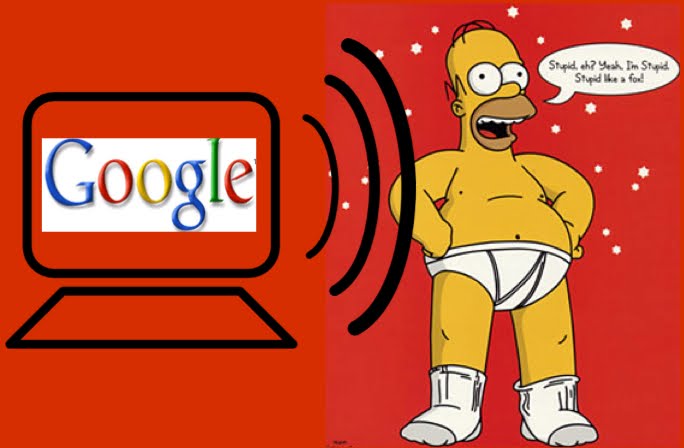
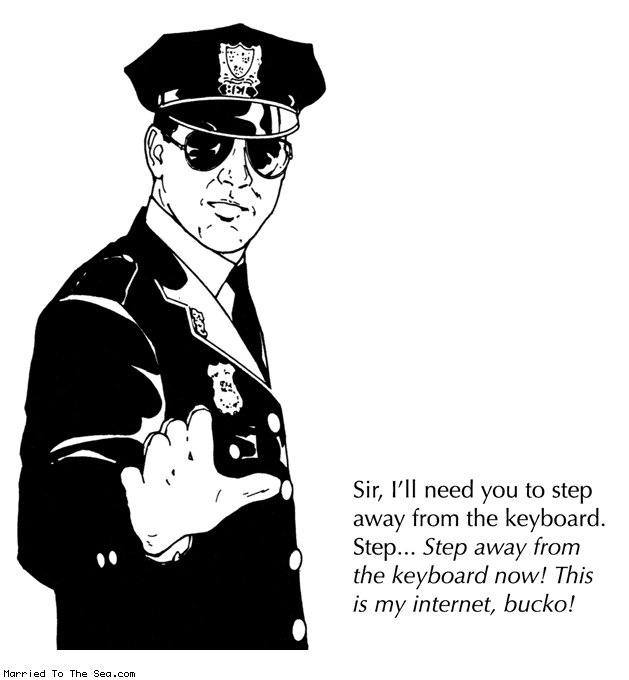
And some funny little cartoons about internet trolls:


Final Post #4

Theme 7: Privacy in the Age of Google


  • Article: Writer Evan Ratliff Tried to Vanish: Here's What Happened
At the thought of how much information can be legally attained on someone, I panic. It's scary that people can learn so much about you, like how the hunters found out Evan's catsitter's name. It is completely useless information, but something pretty private. If they found out that, imagine all they could find. There is essentially no privacy in the world we live in. It's completely annoying and frustrating that, to disappear, I'd have to go through the trouble of diverting my IP address and avoid credit transactions. Granted, this was a contest to win money, so of course the search was more intense than if I decided to pack up and start a new life. However, it's just the fact that anyone can find out almost anything; and new forms of media only make it easier. Using Twitter and Facebook, people can join together and make public what are supposed to be private details. Hunting for private information isn't as hard as it seems; I'm not sure people even realize that they are doing it to themselves. Every time someone posts to Twitter, they are revealing something about themselves to the public. Every bit of information that goes onto Facebook is out there for the world to see. Of course, there are privacy settings, but honestly, they are quite easy to get around. From personal experience, I know this. I have some of my pictures on Facebook set to private because I don't need people snooping and knowing all that goes on in my life. (I know, you'd say, don't post them then. The ones I have private are the ones I cannot help being posted, by other people.) One person I have them set private from recently instant messaged me, "Oh how was your party the other night? It looked fun." I rarely talk to this person, and I had definitely not told them I was throwing a party with my friends. They are mutual friends on Facebook with one of mine, and because they could see my friend's pictures, they could see the very pictures I did not want them to see. It was harmless, but annoying. This is not illegal. That's the scariest part to all of this. How much legal information can people actually gain access to? According to the article, enough to stalk a person across the country and meet them outside of an obscure bookstore. Evan Ratliff accurately words my thoughts about the panic I have:

"It’s surreal, in those moments when I stop to think about it. Scores of people have studied my picture, stared into those empty eyes in the hopes of relieving me of thousands of dollars. They have stood for hours, trying to pick out my face in a crowd. They’ve come to know me like we’ve been friends for years. It’s weirdly thrilling, in a narcissistic kind of way, but also occasionally terrifying."

  • Old Media: Print
I'm actually not quite sure what old media concept could be tied into this lack of privacy. It seems to me that we are straying away from any privacy media did have and creating new media to further the process. The only thing I could think of was the book "1984" and how it speculated about this type of thing. It's kind of ironic that, even though "1984" was a warning and terrifying to many people, we are moving more towards it than not. Of course, we aren't as restricted as the society in the book. However, we live in an age where anything can be found out about us, if someone really wants to. A simple search on Google can produce numerous results. Even Googling myself gives me my Facebook page, articles about my softball career in various newspapers, and the C.W. Post softball website. Nothing dangerous, but unsettling that information can be found so easily. "1984" warns of this, and it's interesting that we're voluntarily putting ourselves out there.


  • Theory: Situationalism
Meyrowitz said that certain social situations dictate how we act, but new media have changed social situations. We can constantly access information and no longer have to physically be present somewhere to know what's going on. Because we're constantly in touch with friends, celebrities, and random people we never knew existed, social situations change, therefore changing our behavior. We can constantly be "in the know" about someone or something, and we can therefore be regarded as experts on certain topics. If you ask me, I don't want anyone to be able to be an expert on my private information, but just look at the Tiger Woods scandal. Numerous private details are leaking out, and we have no idea which are true, but we do know that something happened. A ton of people claim they know exactly what happened, and according to magazines, they are regarded as experts and sources. New media that broadcast personal details of private lives definitely change social behavior and roles.
Sunday, December 13, 2009

Final Post #3

I apologize in advance if this blog isn't as well thought out as it could be. I just spent an hour and a half writing it, and it got deleted. So, on the verge of tears, I will attempt this again...

Theme #4: The trend in each emerging medium from utopian ideals to the focus on monetizing.


  • Article: "How Tweet It Is"
The opening statements of this article are, "Sure, the Twitter guys still have no idea how to make money off their fabulous invention. But for now they are living in a dreamworld of infinite possibilities, maybe the last one on Earth." This is immediately indicative of the world we live in. The article, though talking about the merits of Twitter, seems to focus on how exactly the service will make money. There are a full four paragraphs speculating about how the monetizing will take place. From "brand verification" to the possibility of charging users a subscription fee, making money is on the way. However, the creators of Twitter don't seem as concerned as most other people do.

"When you ask Williams and Stone about revenue, they’ll—reflexively, defensively—remind you how young the company is, then they’ll point out that they have to worry about first making sure their product is flawless, then they’ll note that no one asked Google in 1998 how it was going to make money, then they’ll gripe that just because everyone else on the planet is terrified about money right now doesn’t mean they have to be."

It seems like they're only trying to make money off of the service because that's what everyone expects them to do. We live in a capitalist society that focuses only on making money. However, that usually turns something "pure" into an advertisement-laden annoyance. In fact, later in the article, the author talks about how, because of Twitter, pictures and posts about the Hudson River plane crash were up before any newspapers could cover it.

"Krums’s first instinct was to take a picture and load it to the web. There was nothing capitalistic or altruistic about it. Something amazing happened, and without thinking, he sent it out to the world. And let’s say he hadn’t. Let’s say he took this incredible photo [...] and decided to sell it, said he was hanging onto it for the highest bidder. He would have been vilified by bloggers and Twitterers alike. His is a culture of sharing information. This is the culture Twitter is counting on. Whatever your thoughts on its ability to exist outside the collapsing economy or its inability (so far) to put a price tag on its services, that’s a real thing."

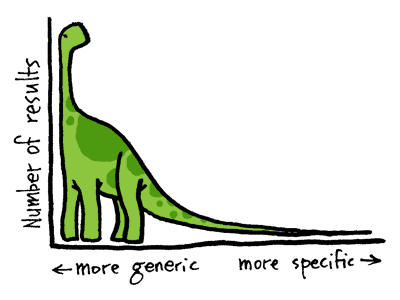
This is the utopia that Twitter is now. There was no focus on money, just information sharing. However, the use of the phrase "so far" puts, again, an emphasis on monetizing. This obsession with monetizing Twitter has even made it's way into sarcastic cartoons, like this one I found online:


  • Old Media: Radio
FM radio began as a utopian ideal, just as Twitter is today. It had the freedom to play whatever it wanted, and DJs only played advertisements for products they supported. The focus was less on money and more on having a good time listening to music and creating a community. Now, FM radio as we know it, has no freedom and is all about monetization. Old FM radio gained success, and corporations immediately saw a way to make money. They squeezed the life and essence out of old FM radio and changed it into a robotic advertisement, with ten of the same songs played in between. Old FM radio seems to be comparable to Twitter now, and if the focus on monetizing Twitter continues, it could fall in line with FM radio as we know it now - a bland, lifeless medium only focused on making money, taking all the purity from what it used to be.

  • Theory: Capitalist Ideology
America is a capitalist society. Every form of media there is focuses on making money. If it does not make money, it's purpose has not been served. However, not every medium starts out that way. As I said before, FM radio started as a form of enjoyment, and now I can't turn on the radio without hearing DJs scream and rave about different products they swear by. The same could be predicted to happen with Twitter. Advertising is everywhere; we can never escape it because we are constantly being sold a lifestyle that is based on consuming. Because there is such a focus on this capitalist lifestyle, Twitter is likely to fall in line, even though it is now more on the utopian side of different media. Sometimes, the pure form of something should remain just that - pure. Trying to make money, though important, seems to drain the life out of things we enjoy, and this idea definitely applies to Twitter.

Final Post #2

Theme 1: The evolution of the idea of the media audience from mass to "the long tail" and the tendency to cluster with like-minded individuals.


  • Article: "The Long Tail"
This article was a very, very interesting read. It's all about changing the market from selling hits to selling "misses." Rather than being worried about how much of a demand there is for something in one specific place, the internet has no physical space, and can therefore carry anything it wants and sell to whoever wants to buy.

As I read through the article, I realized how important recommendations are to me when I'm buying something; whether from a friend, Amazon, or Pandora, I always give those recommendations merit. I tend to have the same interests as my friends, especially in musical preference. Though there is always some variation, my friends and I always exchange songs and new artists we've come across. It's as
if the web can do this for me; I am becoming "friends" with people across the country with similar interests as me, but I almost view the actual websites - Pandora or Amazon - as my friends for recommending new things to me. Recommendations and "clustering" are definitely effective ways to sell music, movies, books, video games, or anything, really. It's beneficial for the artists who would probably not have been known to certain consumers because they get new business. It's beneficial for consumers because they can find new products that fit their true tastes, and not just the tastes that have been set by mass marketing. It's even beneficial for the companies selling the products. They are still selling the hits, probably making a good profit off of that, but they are also able to sell more products to a large audience. It's very interesting that the internet has made this all possible. It's hard to think about finding new music to listen to without the recommendations of Pandora or find new books to read without Amazon!

  • Old Media: Advertising
This article really connects to the old way of advertising - before products could be essentially advertised by recommendations of other consumers. In general, advertising had to be executed perfectly. Advertisements are expensive, and they must be directed towards the right audience. If anything goes wrong in the advertisement, money is lost and it could be detrimental to the product. This is still done to an extent, but now, it is very easy to simply list a movie under a section titled, "If you liked ____, then you'll like _____" If it receives interest, great. If not, that's okay, because there are thousands of other recommendations for potential buyers. Also, in the new way of advertising through "clustering," there is a lot of contact and interaction between customers. It may not be completely obvious, but without the other buyers, we wouldn't have new products recommended to us. In the old way of advertising, consumers had no say in what was sold, and they had no way of recommending products on a mass scale. They had to like what they were told to like. With the Long Tail, we have more say in what products are sold, and we can like what we want to like.

  • Theory: Winston
Winston's theory is not clearly seen in new media that participates in the long tail, but that's the point of his theory in general. I think of Amazon and Pandora as changing the way we shop and find new products, but according to Winston, these new media have only come about as a response to social changes. Maybe we wanted all this new freedom to find artists we like and "old" products no longer on shelves, and business minds saw this need. Or maybe these media were "disruptive technologies" and truly did change the way we think and consume.

Also, think of the work required to create these media that can truly embrace the long tail. They had to have been built up over time, especially sites like Pandora. In reading the article about Pandora, every single song is broken down and analyzed. That is a ridiculous feat. New media are not revolutions, but evolutions, and Winston's idea applies to the new media discussed in this post.


Thursday, December 10, 2009

Final Post #1

Theme #5: The ideas that we begin to take on the qualities of the " intellectual technologies" we use, i.e. media shape out thought processes, and that we are increasingly off-loading our memory and other functions to various devices.

  • Article 1: "Is Google Making Us Stupid?"
First, I have to say that I immediately proved this article right. I saw that it was a bit lengthy and began to read, but quickly skipped to skimming the article for key points. The article was all about how articles and information online have made ease of access unbelievable. We no longer have to spend hours researching topics; type a few key words into a search engine, and a whole slew of information - factual or not - comes up. One paragraph seems to sum up the idea of the article completely:

"My mind isn’t going—so far as I can tell—but it’s changing. I’m not thinking the way I used to think. I can feel it most strongly when I’m reading. Immersing myself in a book or a lengthy article used to be easy. My mind would get caught up in the narrative or the turns of the argument, and I’d spend hours strolling through long stretches of prose. That’s rarely the case anymore. Now my concentration often starts to drift after two or three pages. I get fidgety, lose the thread, begin looking for something else to do. I feel as if I’m always dragging my wayward brain back to the text. The deep reading that used to come naturally has become a struggle."

This completely relates to the theme I chose. We are relying on a search engine to do our research for us. First of all, who knows what articles and websites certain search engines choose and why, and second, we have no control over those choices. We get what we get, and we often trust those sites as the last and final word on a topic. The way we access information is changing, but it is changing our minds along with it. For example, I am a curious person. When I see a movie, I like to go home and look up information about it. When I visit a new place, I like to research the history of the area. Even when I was introduced to red wine, I spent a lot of time on the internet researching the various types and brands. However, I never delve deeply into any of these topics. The first source I go to for information is Wikipedia. I know, I know. It is not a reliable source; however, it satisfies my need for information quickly, and that's exactly my point. Years ago, if I wanted information on topics, I'd have to read books and books until I found a source that gave me the information I wanted to know, but with the internet, I can easily access it. For all the ease it provides, my thought process is changing. I don't always have the patience to actually sit down with a scholarly source like my parents did. I don't always make connections between these scholarly sources I may be able to make if I actually did consult them more often. I know my mind is capable of it; we just live in an age where information is at our fingertips - literally, in the case of the iPhone. Even sites like Yahoo change our thinking - we don't have to search newspapers for news, but simply glance at Yahoo and pick and choose what article we're going to skim today. As the article states, our thinking has "taken on a 'staccato' quality," and it is because we have the ability to consult many short sources while skimming long ones for key points.

  • Old Media: Radio
When I got to the part in the first article about "staccato thinking," it immediately reminded me of the change from 1960's radio to 1980's radio. Think about 1960's radio in comparison to the old style of researching: lengthy, information-rich, no solid format. 1980's radio reminds me of the new way of researching: quick, information-shallow, structured (in terms of the way search engines are set up as compared to the freedom of exploring different books). The so called "shock jocks" are like the search engines themselves. They produce various bits of information and news, but nothing they say is ever completely thorough. Our minds bounce from one sound effect to the next, one upbeat song to a caller complaining about her boyfriend, and even from one DJ to the next. We have no time to actually deeply contemplate things; our thinking is forced to take on a pinball-like quality, bouncing around from subject to subject. Old style radio was more relaxed, allowed people to listen to a whole album, and discussed topics worth discussing - most likely in detail. It is not just Google that is changing the way we think, but everything around us.

  • Theory: MacLuhan's Medium Theory
MacLuhan's Medium Theory focuses on "the way the technology itself changes individuals and society." It is clear that this theory applies to the theme; in fact, the article "Is Google Making Us Stupid?" even talks about MacLuhan. The author states, "As the media theorist Marshall MacLuhan pointed out in the 1960s, media are not just passive channels of information. They supply the stuff of thought, but they also shape the process of thought." This is exactly right; we are shaped by our technologies. It is scary that our thought processes are so influenced by what's around them, but it is clear that it is true. Google has changed our thought processes, radio has changed our thought processes, and even internet news has changed our thought processes - just as MacLuhan theorized.


Monday, November 16, 2009

The Exorcist: My Most Memorable Experience

When I was in 4th or 5th grade, I watched the 1973 The Exorcist with my best friend. No one but us was home, and we turned the lights off to create a scary mood. It worked. After watching the movie, with plenty of screams throughout, I couldn't even ride my bike home. I couldn't lie in my bed without fear that it would start shaking. I was scared to look at stairs, thinking of vomiting blood. I couldn't even eat my favorite split pea soup because that's what the vomit in one of the scenes reminded me of. (Even trying to find a clip of the movie now is making me nauseous and cover my eyes.) This movie put the fear into my ten-year-old mind that I'd be possessed by a demon. I had grown up in a semi-religious home; we weren’t avid churchgoers but I always attended Vacation Bible School and believed in Christianity. Because of this “lukewarm religion,” I think the movie affected me even more. I believed enough in God to hope that this evil thing could not happen to me, but I didn’t have a regular pastor to tell me if the movie was inaccurate to the teachings of the Bible. My non-believing friend was, although scared at the time we watched the movie, safe from all the worrying my mind did for the next few months.

As far as Parker’s article goes, I believe it’s irrelevant to my experience. The article talks about remakes and times of popularity. Though the film was made in 1973 and could be considered a response to the Vietnam War, I didn’t view it when it came out, and it hadn’t gained any more popularity at the time I did view it. In addition, I had no desire to see the sequels to the film. Also, I believe that this film is on a different level than slasher films. It’s more psychological and spiritual than a psycho with a knife; The Exorcist plays on your religious beliefs and fears of an invader in your body. The shots in this movie that set the tone are not necessarily the barren streets as Parker describes in Halloween; the scenes that disturbed me the most were when the girl’s body was distorted. My choice to watch The Exorcist wasn’t based on the conflict of the time of even that “everyone was watching it” at that time period. Relevance could be found in the article when Parker talked about torture. The girl in the exorcist was very much tortured, and that stuck with me, hoping that I would never be tortured in any similar way. Also, the fact that the demon didn’t necessarily die, but was only expelled from the girl’s body, makes it possible to make many sequels. These factors seem to hold true for many horror movies, just not my experience of this particular one.

I also cannot think of a connection to Clover's ideas on why teens are attracted to this type of movie. The monster isn't necessarily a man, and the heroine isn't a sexy, voluptuous young woman. Teens cannot identify with either character, but I suppose boyfriends could "protect" girlfriends, although this would never work for me! I refuse to ever watch this movie again!


http://www.youtube.com/watch?v=o-4f_NMUxcY

I apologize that it isn't embedded into the post, but for some reason this particular video has embedding disabled, and this is the scene that really stuck with me.

Tuesday, November 10, 2009

Final Post

I've been reading the book, "In Cold Blood" for class, and I came across a line I found very interesting:

"Or we'd go to the Cree-Mee - that's a drive-in - and sit in the car, order a Coke, listen to the radio. The radio was always playing; we didn't have anything to say ourselves."

I immediately noticed that it said the radio was always playing. It's interesting to think about how media is so prevalent in our lives, whether we realize it or not. Often times, the TV is on for background noise, and we take in more than we know. People walk the halls with their iPods on all the time. Movies are an every weekend occurrence for many teenagers. MTV shows are quoted by college kids everywhere; whether or not they're making fun of the shows doesn't matter if the shows made that big of an impact on their memories. Facebook and Myspace broadcast an abundance of personal information to who-knows-where.

Because it is so much a part of our lives, it's a perfect way for capitalism to take hold. One corporation can own several stations on both TV and radio, and products are consistently placed throughout movies and television shows (supposedly casually). We cannot escape advertisements because we cannot escape media.

Whether we like it or not, media has become integrated into our lives, and there's no way to get rid of it (unless you follow Christopher McCandless from Into the Wild and disconnect yourself from the world completely :P)

P.S. I'm in class until after noon tomorrow, so I have to post all these now for the sake of my assignment being on time!