Theme #3: Every form of technology that's gone digital has been transformed by its users/audience.
- Article: "The Trolls Among Us"
If people are HTML-savvy enough, they can hack and change anything on the internet. Now, though, almost anyone is able to alter media to fit their preferences. Blogs can be changed to look a certain way, and Facebook is constantly coming out with new applications made by users. Almost every large-scale social website gives the option to alter the colors and look of the page. YouTube videos can be made by anyone, and anyone can comment on them or respond back with more videos. Even Pandora radio is altered to fit our musical tastes. The article "The Trolls Among Us" tells of internet users everywhere that hack into websites and alter photos and videos all to get a rise out of other innocent internet users.
"Today the Internet is much more than esoteric discussion forums.
It is a mass medium for defining who we are to ourselves and to others. Teenagers groom their MySpace profiles as intensely as their hair; escapists clock 50-hour weeks in virtual worlds, accumulating gold for their online avatars. Anyone seeking work or love can expect to be Googled. As our emotional investment in the Internet has grown, the stakes for trolling — for provoking strangers online — have risen."
It is interesting to look at why digital media
is transformed by its audience and come up with the explanation that it is to define who we are. Why are blog colors changed? To show our personality through carefully selected HTML codes. Why are YouTube videos published? To show the world who we are and that we have talents worth sharing. It's unsettling that these so called "trolls" are able to alter sites and photos for a bad cause. Most of the time, internet users alter and transform websites just for innocent entertainment, but trolls are an example of how this altering can go wrong.
Now, I realize I have used the example of radio a lot, but I find it very interesting how the change happened. In FM radio's case, the roles of the audience modifying have been switched. When FM radio first emerged, DJs had the freedom to basically do whatever they wanted, and could therefore accept every request that came in. Listeners were essentially able to alter the radio stations to fit their preferences, to a certain extent. Now, listeners rarely have a chance to request anything. DJs are stuck to a certain playlist that they can't stray from even if they wanted to. Listeners have no say in how the radio station is run and what plays. It's interesting that as FM radio got more popular, the audience's ability to alter it lessened, but as new media emerge and become popular, audiences are able to alter almost everything about it, whether it be negatively or harmlessly.
Winston's theory of evolving media is completely relevant here. But it's not only the creators of different forms of media that help it to evolve; users further the evolution of media by altering it and changing it into something different. Winston "describes the process whereby society and individuals incorporate media technologies into the fabric of daily life." As users make media more befitting of their personalities, they make it more personal and truly do integrate it into their daily lives. They have a sense of ownership of
their form of the media. Audiences changing media can also be viewed as Winston's accelerators. Users make the media fit their preferences, and therefore better. Making the media better makes more people want to use it, accelerating its acceptance.
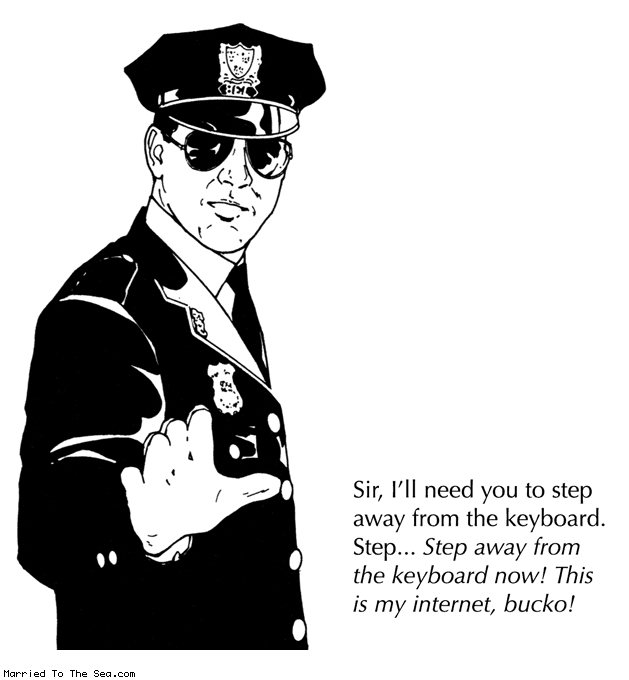
And some funny little cartoons about internet trolls:


No comments:
Post a Comment