Sunday, December 13, 2009

Final Post #2

Theme 1: The evolution of the idea of the media audience from mass to "the long tail" and the tendency to cluster with like-minded individuals.


  • Article: "The Long Tail"
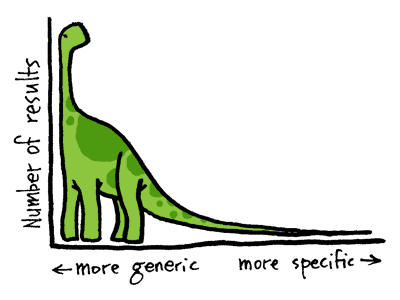
This article was a very, very interesting read. It's all about changing the market from selling hits to selling "misses." Rather than being worried about how much of a demand there is for something in one specific place, the internet has no physical space, and can therefore carry anything it wants and sell to whoever wants to buy.

As I read through the article, I realized how important recommendations are to me when I'm buying something; whether from a friend, Amazon, or Pandora, I always give those recommendations merit. I tend to have the same interests as my friends, especially in musical preference. Though there is always some variation, my friends and I always exchange songs and new artists we've come across. It's as
if the web can do this for me; I am becoming "friends" with people across the country with similar interests as me, but I almost view the actual websites - Pandora or Amazon - as my friends for recommending new things to me. Recommendations and "clustering" are definitely effective ways to sell music, movies, books, video games, or anything, really. It's beneficial for the artists who would probably not have been known to certain consumers because they get new business. It's beneficial for consumers because they can find new products that fit their true tastes, and not just the tastes that have been set by mass marketing. It's even beneficial for the companies selling the products. They are still selling the hits, probably making a good profit off of that, but they are also able to sell more products to a large audience. It's very interesting that the internet has made this all possible. It's hard to think about finding new music to listen to without the recommendations of Pandora or find new books to read without Amazon!

  • Old Media: Advertising
This article really connects to the old way of advertising - before products could be essentially advertised by recommendations of other consumers. In general, advertising had to be executed perfectly. Advertisements are expensive, and they must be directed towards the right audience. If anything goes wrong in the advertisement, money is lost and it could be detrimental to the product. This is still done to an extent, but now, it is very easy to simply list a movie under a section titled, "If you liked ____, then you'll like _____" If it receives interest, great. If not, that's okay, because there are thousands of other recommendations for potential buyers. Also, in the new way of advertising through "clustering," there is a lot of contact and interaction between customers. It may not be completely obvious, but without the other buyers, we wouldn't have new products recommended to us. In the old way of advertising, consumers had no say in what was sold, and they had no way of recommending products on a mass scale. They had to like what they were told to like. With the Long Tail, we have more say in what products are sold, and we can like what we want to like.

  • Theory: Winston
Winston's theory is not clearly seen in new media that participates in the long tail, but that's the point of his theory in general. I think of Amazon and Pandora as changing the way we shop and find new products, but according to Winston, these new media have only come about as a response to social changes. Maybe we wanted all this new freedom to find artists we like and "old" products no longer on shelves, and business minds saw this need. Or maybe these media were "disruptive technologies" and truly did change the way we think and consume.

Also, think of the work required to create these media that can truly embrace the long tail. They had to have been built up over time, especially sites like Pandora. In reading the article about Pandora, every single song is broken down and analyzed. That is a ridiculous feat. New media are not revolutions, but evolutions, and Winston's idea applies to the new media discussed in this post.


No comments:

Post a Comment